Annamalai’s Exit Plans Spark Political Buzz in Tamil Nadu
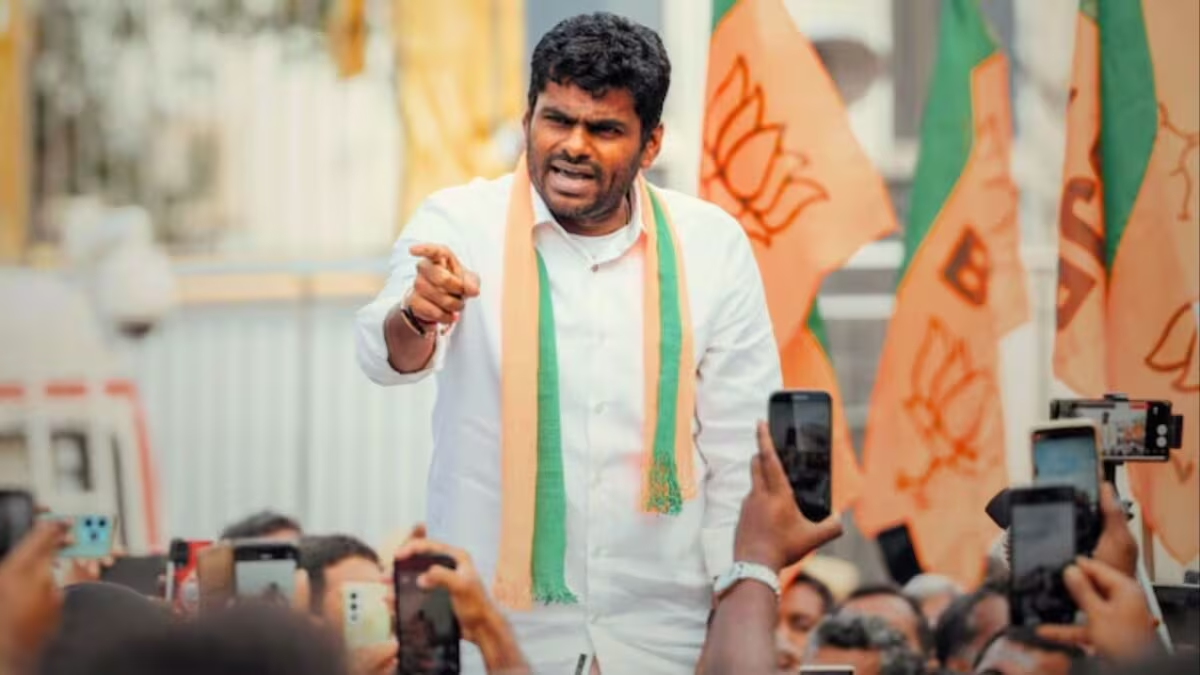
Former Tamil Nadu BJP chief K. Annamalai is reportedly preparing to leave the Bharatiya Janata Party (BJP) and launch a new regional political outfit, a move that could significantly reshape Tamil Nadu politics. While speculation had been building for weeks, recent reports suggest that a combination of strategic disagreements and post-election developments became the final trigger behind his decision.
According to reports, Annamalai has already met senior BJP leaders in New Delhi and is expected to formally explain the reasons behind his departure.
AIADMK-BJP Alliance Became the Biggest Flashpoint
Political sources indicate that Annamalai’s strongest disagreement was with the BJP’s decision to align closely with the AIADMK ahead of the 2026 Tamil Nadu Assembly elections. He reportedly believed that the alliance limited the BJP’s independent growth prospects in the state and weakened efforts to build the party as a standalone political force.
Reports suggest that he was unhappy with alliance negotiations and seat-sharing arrangements, believing that the BJP had compromised too much in order to maintain the partnership with the AIADMK.
Candidate Selection Added to Frustrations
Another factor reportedly contributing to Annamalai’s dissatisfaction was the selection of candidates during the Assembly elections. Sources claim that he disagreed with several decisions made during ticket distribution and believed that stronger candidates could have been fielded in key constituencies.
The situation became more sensitive when Annamalai himself was left out of the BJP’s final candidate list despite internal discussions regarding his possible candidature.
Many observers view this development as one of the events that widened the gap between Annamalai and sections of the party leadership.
Election Results Reinforced His View
Reports indicate that the BJP’s performance in the Tamil Nadu Assembly elections strengthened Annamalai’s belief that national parties face structural limitations in the state. He reportedly concluded that younger voters were increasingly looking for a regional political alternative that combined Tamil identity with a broader national outlook.
Sources close to him suggest that the electoral outcome convinced him that a new political platform would have better long-term prospects than continuing within the existing BJP structure in Tamil Nadu.
Differences Extended Beyond Electoral Strategy
In recent weeks, Annamalai publicly diverged from the BJP’s position on certain issues. One notable example was his criticism of the CBSE three-language policy, where he called for reconsideration of the notification despite the BJP supporting the broader policy framework.
Political analysts believe such differences reflected a growing effort by Annamalai to position himself closer to Tamil Nadu’s regional political sentiments.
Plans for a New Political Party
Reports suggest that Annamalai is planning a new regional party that would describe itself as secular, Tamil-centric, and nationally oriented. The proposed platform is said to be based on what supporters are calling a “Dravidian 2.0” model—an attempt to combine regional aspirations with national integration.
The new organization may first emerge as a social movement before formally transforming into a political party. Sources indicate that preparations for registration and organizational expansion are already underway.
What Happens Next?
Annamalai’s resignation could mark one of the biggest political developments in Tamil Nadu since actor-politician C. Joseph Vijay entered electoral politics. Analysts believe his departure could influence voter alignments, particularly among young voters and sections of the BJP’s support base.
Whether the proposed party can emerge as a major force remains uncertain, but his exit would undoubtedly create fresh political equations ahead of the next electoral cycle.
Conclusion
The reported decision by K. Annamalai to leave the BJP appears to be the result of multiple factors, including dissatisfaction over the AIADMK alliance, seat-sharing arrangements, candidate selection, and broader disagreements over the party’s future strategy in Tamil Nadu. However, political observers point to the AIADMK alliance and the 2026 election experience as the final push that convinced him to pursue an independent political path.