Assam Passes Uniform Civil Code Bill
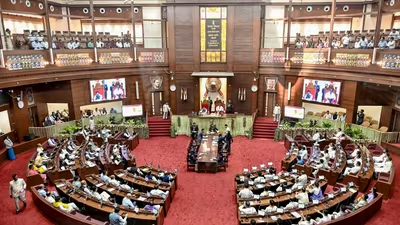
Assam has become the third Indian state to pass the Uniform Civil Code (UCC) Bill, marking a significant political and legal development. The move has sparked intense debate across political circles, with the ruling government describing it as a step toward equality and legal uniformity, while opposition parties criticized it as a “political stunt.”
The passage of the bill places Assam among the growing number of states adopting legal reforms related to personal laws and civil matters.
What is the Uniform Civil Code?
The Uniform Civil Code refers to a common set of civil laws that would apply equally to all citizens regardless of religion. It generally relates to issues such as marriage, divorce, inheritance, adoption, and property rights.
Supporters of the UCC argue that it promotes equality, national integration, and a uniform legal framework. Critics, however, believe that personal laws connected to religion and cultural traditions require careful consideration and broader consultation.
The debate around the UCC has remained one of the most discussed constitutional and political topics in India for decades.
Government Defends the Move
The government in Assam stated that the bill is aimed at ensuring equal rights and simplifying legal processes for citizens. Officials argued that a common legal framework could help reduce legal complexities and strengthen social justice.
Leaders supporting the bill also claimed that the reform aligns with constitutional principles of equality and modern governance.
The state government emphasized that the legislation was introduced after examining legal and administrative aspects related to personal laws.
Opposition Criticizes the Decision
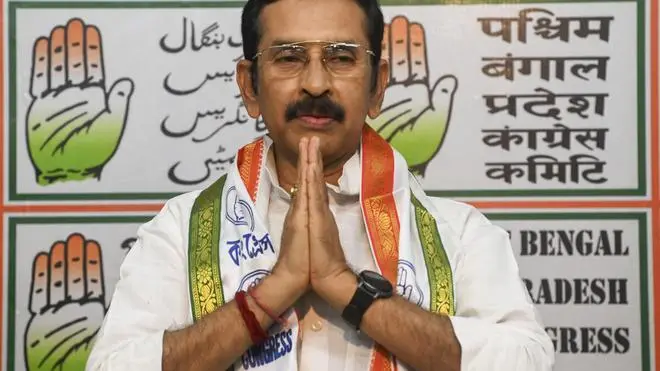
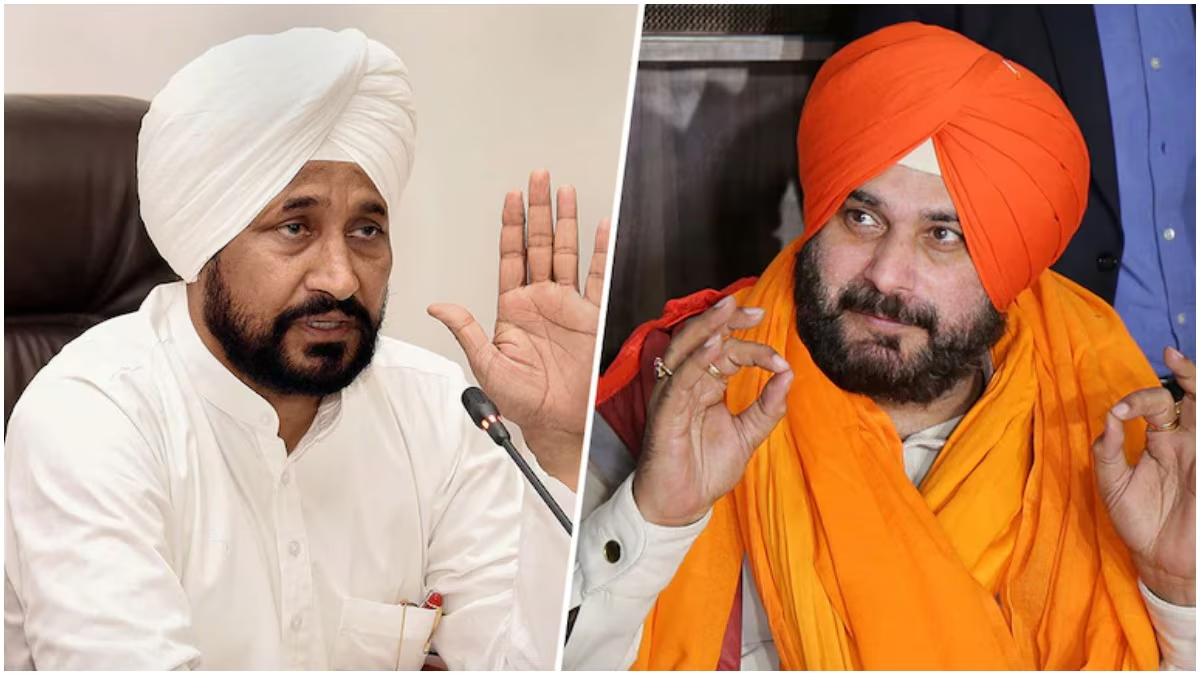
Opposition parties strongly opposed the bill and described it as politically motivated. Critics accused the ruling party of using the UCC debate to gain political advantage ahead of future elections.
Several opposition leaders argued that sensitive issues related to religion and personal law should be discussed through wider public consultation and consensus-building rather than political confrontation.
The opposition also questioned the timing of the legislation and raised concerns about its social and political implications.
National Debate Around UCC Intensifies
The development in Assam is expected to further intensify the national debate surrounding the Uniform Civil Code. The issue has frequently been discussed at both state and national levels, with differing views emerging from political parties, legal experts, and religious groups.
Supporters believe a uniform legal system would strengthen gender justice and constitutional equality, while critics fear it may affect cultural diversity and religious autonomy.
Legal experts note that implementing a UCC across India would involve complex constitutional, legal, and social considerations.
Political Reactions Continue
The passage of the bill has triggered reactions from various political and community organizations across the country. Some groups welcomed the move as progressive legal reform, while others called for greater dialogue and public engagement before implementing such changes.
Political analysts believe the issue is likely to remain a major topic in upcoming political discussions and legislative debates.
The UCC debate also reflects broader conversations around constitutional rights, secularism, and governance in India.
Conclusion
With Assam becoming the third state to pass the Uniform Civil Code Bill, discussions around legal reform and personal laws have once again moved to the center of national attention.
While the government presents the move as a step toward equality and legal uniformity, opposition parties continue to criticize it as politically driven. As debates continue, the issue is expected to remain an important part of India’s legal and political landscape in the coming years.