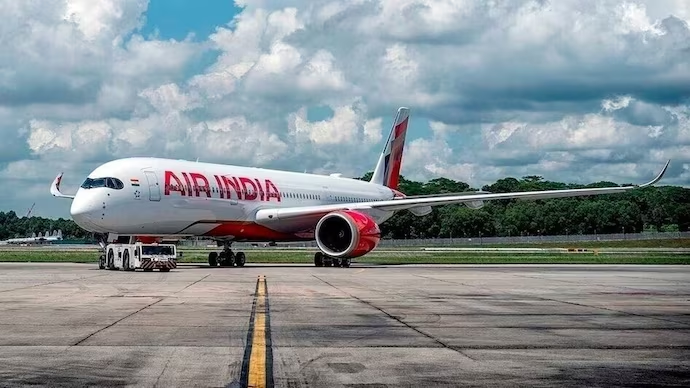
Air India Flight Returns to Delhi After Technical Issue
An Air India flight bound for San Francisco was forced to return to Delhi after developing a technical snag while airborne for more than eight hours. The incident drew attention after the long-haul international flight had already covered a significant portion of its journey before turning back as a precautionary measure.
According to reports, the aircraft safely landed in Delhi, and all passengers and crew members were reported to be safe.
Technical Snag Detected During Flight
Sources indicated that the technical issue was identified during the flight, prompting the airline to take precautionary measures in line with safety protocols. The pilots reportedly decided to return to Delhi after assessing the situation and coordinating with operational teams.
Airlines operating long-haul international routes often follow strict safety procedures whenever any technical irregularity is detected during flight operations. Aviation experts note that precautionary returns are considered standard protocol to ensure passenger safety.
The exact nature of the technical snag has not been officially detailed yet.
Passengers Face Long Delay
Passengers onboard reportedly experienced a long delay after the aircraft remained airborne for several hours before returning to its departure point. Airline officials were expected to arrange alternative travel plans, technical inspections, and passenger assistance following the unscheduled return.
Incidents involving technical issues on international flights can significantly affect travel schedules, airport operations, and connecting journeys for passengers.
Despite the inconvenience, many aviation experts emphasize that such decisions demonstrate the importance airlines place on operational safety.
Safety Remains Top Priority in Aviation
The aviation industry follows highly regulated safety standards, especially for long-haul international flights. Aircraft systems are continuously monitored during operations, and pilots are trained to respond immediately to technical alerts or unusual conditions.
Experts explain that returning an aircraft to the nearest suitable airport is often considered the safest option when technical concerns arise during extended flights.
Air India has undergone significant operational modernization in recent years, including fleet upgrades and service improvements as part of its expansion plans.
Growing Focus on Airline Safety and Maintenance
The incident has once again highlighted the importance of regular aircraft maintenance, technical inspections, and operational monitoring in the aviation sector.
Airlines worldwide continue to invest heavily in safety systems, engineering checks, and pilot training to reduce risks and ensure secure travel experiences for passengers.
Aviation authorities are also expected to review technical reports related to the incident as part of standard procedures.
Passenger Safety Over Schedule
While unexpected returns and delays can create inconvenience for travelers, aviation experts stress that safety-related decisions are always prioritized over maintaining flight schedules.
Precautionary landings and flight diversions are common international aviation practices whenever pilots or technical teams identify possible concerns during operations.
Passengers were reportedly provided support and assistance after the aircraft returned safely to Delhi.
Conclusion
The return of the San Francisco-bound Air India flight to Delhi after a reported technical snag underscores the aviation industry’s strong focus on passenger safety and precautionary action.
Although the incident caused delays and inconvenience for travelers, the safe landing of the aircraft reflects the effectiveness of established aviation safety procedures and operational protocols.